Montessori Makers Institute
The Residency
A teacher preparation program built on the belief that Montessori educators deserve rigorous, respectful, and deeply practical training.
Primary track begins September 8, 2026 · Founding cohort
Why MMR Exists
Montessori teacher preparation has a problem. It is expensive, inaccessible, and built for a demographic that does not reflect the children and communities that need Montessori most. The people doing the most important work in Montessori classrooms right now, paraeducators, teaching assistants, career changers, public school teachers navigating under-resourced environments with children who have been failed by every other system, are the same people who cannot access traditional credentialing. The cost is too high. The schedule is impossible. The culture of the training programs was not built with them in mind.
MMR exists because that is unacceptable.
This is a teacher preparation program for educators who are already doing the work. Residents study the complete Primary curriculum of 224 lessons, earn their credential through a paid practicum placement in a partner school, and graduate ready to lead classrooms with the full theoretical and practical foundation the work requires. No summers away. No $15,000 tuition bills. No program that treats equity as an add-on module rather than a foundational commitment.
The field does not get to keep deciding who is qualified to teach Montessori. MMR is changing that.
What the Residency Provides
Everything you need in one place.
Curriculum Library
A structured, searchable collection of lessons organized by strand, level, and category. The full scope of Montessori practice.
Resident Portal
Your personal workspace. Access assigned lessons, submit album entries, and track your progress across every strand.
Cohort Guide Feedback
Every submission receives written feedback from an experienced Cohort Guide. Growth is guided, not guessed.
Who This Is For
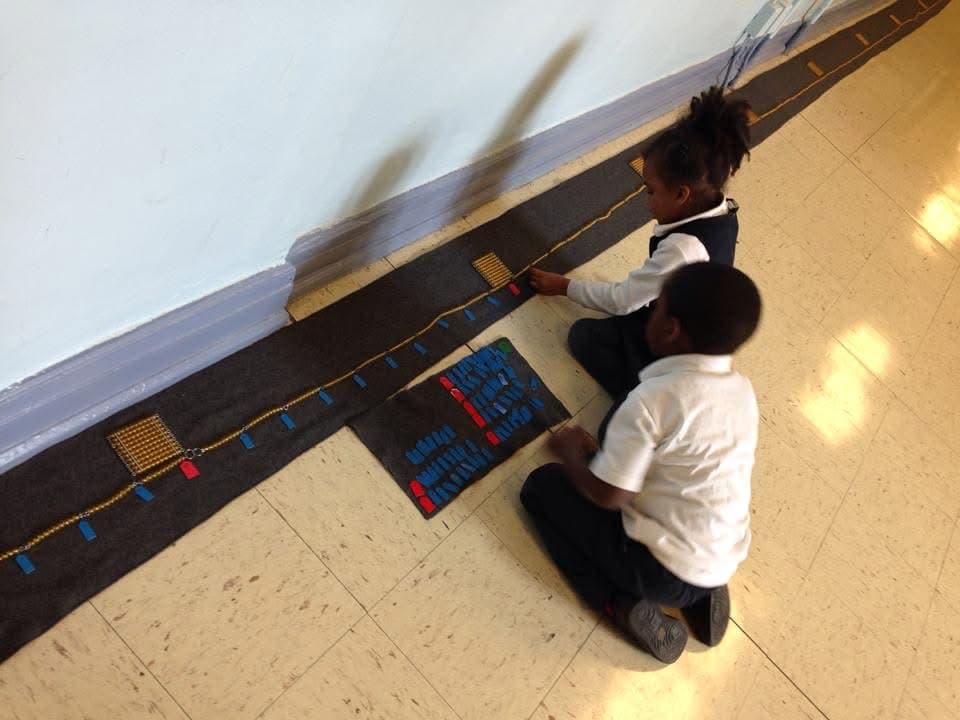
If you have been working in a Montessori classroom for years without a credential because the cost was impossible, this is for you.
If you are a paraeducator or teaching assistant who knows the materials, knows the children, and has never been given a pathway to lead your own classroom, this is for you.
If you are a public or charter school teacher who was handed a Montessori classroom and told to figure it out without real preparation, this is for you.
If you are a career changer with deep roots in your community who chose Montessori because you believe in what it can do for children who look like the children you grew up with, this is for you.
If you have looked at traditional Montessori training programs and seen tuition bills that assume a certain kind of financial cushion, summer schedules that assume a certain kind of family situation, and cohort photos that assume a certain kind of Montessori educator, this is for you.
MMR was not built for the educator who already has every door open. It was built for the educator who has been standing outside the door for years doing the work anyway.
Meet Your Cohort Guide
Primary Cohort
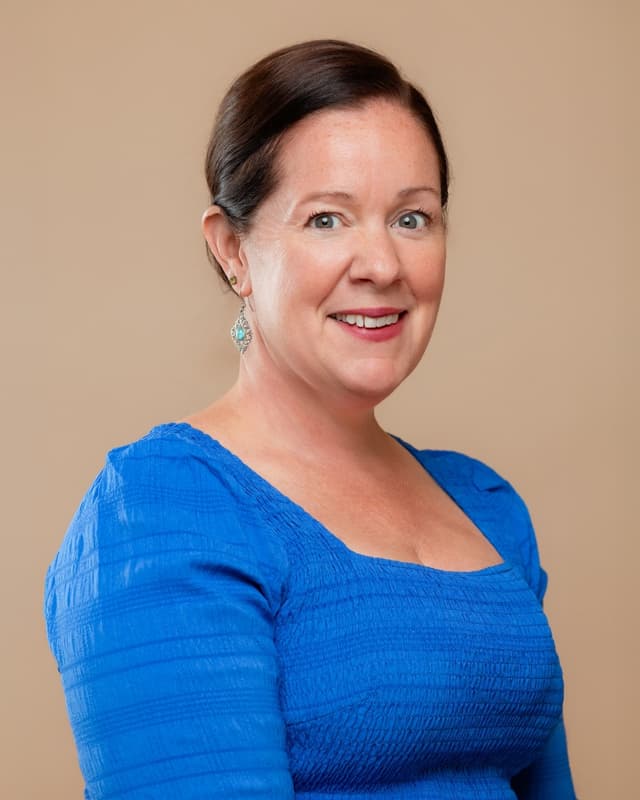
Primary Cohort Guide
Christine McClelland, M.A.
Christine has been an enthusiastic lead Montessori primary teacher for a decade, and spent 18 years before that teaching in urban and suburban traditional schools. She became an AMI certified primary guide in 2016 under Dr. Annette Haines and Lynne Lawrence at the Montessori Training Center of St. Louis. She holds a Master’s Degree from Aurora University and earned a certificate for working with Diverse Learners in The Children’s House from the Maria Montessori Institute of London in 2023.
She is also the parent of two Montessori graduates and is passionate about peace, justice, and building a better world.
Tuition & Payment
Program Tuition
Two credential tracks. Pay in full or choose an interest-free monthly plan.
Primary Credential
Primary Track (3–6)
9-month program · 224 lessons · 7 strands
Pay in Full
$5,000
Total program tuition
Payment Plan
$556 / mo
Over 9 months, no interest
Annual materials intensive:$200–$300 per resident, billed separately from tuition. A remote practice option is available at no additional cost for residents who cannot travel.
MMR is priced at what it actually costs to run a serious program. If the monthly payment is still out of reach, contact us directly for additional support and tuition assistance.
Included with your credential
Your credential comes with a Field Guide.
Every Montessori Makers Residency graduate receives a complimentary 12-month subscription to the Montessori Makers Field Guide upon completion of their practicum. That means the moment you finish your credential, you walk into your classroom with every lesson walkthrough for your level, crisis support protocols, learner support strategies, and an embedded reflection coach in your hand.
Primary graduates receive Primary access. No additional cost. No application. It activates when you complete your practicum, because the first year in your own classroom is when you need it most.
Program Benefit
Your credential comes with a placement pathway.
MMR graduates receive priority placement access through MatchHub, MMG's Montessori hiring platform, where schools can filter specifically for candidates prepared through this program.
This is not a general job board. It is a direct connection to schools that understand what MMG preparation means and are actively looking for candidates who have it.
See the PipelineIncluded with program completion
Third Period.
Third Period is MMR's post-practicum alumni gathering, included with program completion at no additional cost. Once a month, Primary alumni meet in a peer-led space to talk about what's actually happening in their environments. There's no outside facilitator, no curriculum, and no agenda. Someone from the group steps up to lead each session, and the conversation goes where it needs to go.
The name comes from the three-period lesson, that moment when you move from learning something to knowing it well enough to use it and share it. Third Period is where that happens in community. As the gathering grows, newer alumni bring real questions and more experienced ones bring hard-won perspective. It's the three-year cycle, extended beyond the classroom and into your life as a guide.
You finish MMR. You don't finish Third Period.
For Schools
Host an MMR resident during the practicum year.
MMR partner schools provide the real-classroom conditions that make formation possible. The relationship is peer-level: the school gets a committed practitioner trained in authentic Montessori practice and equity-centered pedagogy, MMR gets a quality site where residents can develop under a qualified Site Mentor. MMR pays the mentor stipend directly — it does not flow through school payroll.
Public, charter, independent, and embedded Montessori programs are all welcome. Schools serving communities historically underserved by traditional Montessori training pipelines are strongly encouraged to reach out, including those exploring the non-standard placement pathway.
Common Questions
What people ask before they apply.
Do I need Montessori experience to apply?+
No. MMR was built for educators who are committed to the work, not for educators who have already completed it. What you need is a bachelor’s degree from a regionally accredited institution (an MMR admission standard, no exceptions), a genuine equity commitment, and access to a Montessori observation site. Everything else we build together.
Can I do this while working full time?+
Yes. The academic phase is fully asynchronous except for twice-monthly live seminars and one monthly observation visit. You study when you can. The curriculum does not care whether you open your lessons at 6am or 11pm. The seminar schedule is set at the start of each cohort year so you can plan around it. The practicum year requires a placement in a Montessori school as a paid guide or assistant guide, which for many residents means transitioning into or continuing in a Montessori role while completing supervised hours.
What are the formal assessment requirements?+
There are written exams at the end of each strand, two oral exams across the full program, a 2,000-word capstone reflection at completion, and seminar reflections submitted before every session. Everything is reviewed by your Cohort Guide and documented in your program portfolio for the accreditation record. The exams are not surprises — they are the natural conclusion of the work you have been doing all year. The capstone is where you account for who you became across the program. That is harder than any exam.
What is the Cohort Guide and what do they actually do?+
The Cohort Guide is your primary relationship with MMR across the full program. They facilitate your twice-monthly seminars, review your album entries, conduct virtual observations of your classroom practice during the practicum year, and connect monthly with your on-site Site Mentor about your progress. They hold an AMI credential at the appropriate level with a minimum of five years of lead guide experience. They are not a manager. They are a more experienced Montessori educator who accompanies you through the full arc of your formation.
Who supervises me during the practicum year?+
Two people. Your Cohort Guide conducts two formal virtual observations across the practicum year and continues to facilitate your twice-monthly seminars. Your Site Mentor is the credentialed guide at your practicum school who is present daily and conducts four formal quarterly observations. Both supervisors use the same MMR observation rubric. Both submit written feedback stored in your portfolio. They connect monthly to share updates on your progress. You are not supervised by a stranger who visits twice a year. You are supported by two people who know your practice and your context.
What if my placement school does not have a credentialed guide on staff?+
When no AMI or AMS-credentialed guide is employed at the placement site, the Program Coordinator assumes full observation responsibility for that resident's practicum year — conducting all four formal quarterly observations using the same protocol and documentation required in standard placements. The host school designates a School Liaison for daily presence and logistical support; that person does not conduct formal observations and is not required to hold a credential. The observation requirement is not reduced. Because on-site observations require travel to the placement location, all associated travel costs are the responsibility of the resident or the host school, determined and agreed upon between them before placement approval and documented in writing in the resident's placement file. Placements of this type require prior approval from the Program Coordinator.
What is MACTE and does my credential matter?+
MACTE is the Montessori Accreditation Council for Teacher Education, the only accreditor of Montessori teacher preparation programs recognized by the U.S. Department of Education. A MACTE-accredited credential is the standard recognized by Montessori schools across the country and internationally. Montessori Makers Residency is an Applicant in Good Standing for its Primary (3–6) level with MACTE (macte.org). Applicant in Good Standing status in no way determines the outcome of the accreditation decisions by MACTE. The program is designed and documented in full alignment with MACTE’s Quality Principles. Residents who complete MMR now will hold a credential from a program that is actively pursuing accreditation. When accreditation is granted MMR graduates will hold credentials from a MACTE-accredited program. We are transparent about where we are in this process because you deserve to make an informed decision.
What if I cannot attend a seminar?+
Every seminar is recorded and posted to the platform within 24 hours. Residents who miss a session watch the recording and post a brief reflection in the cohort channel so the Cohort Guide knows they engaged with the content. Life happens. The program is built for working adults and the structure reflects that.
What does the practicum year actually look like?+
The practicum year follows the completion of the academic phase. Residents are placed in a partner school as a paid guide or assistant guide earning a living wage while completing a minimum of 540 supervised practice hours. The Cohort Guide continues the twice-monthly seminars with a full shift to practicum integration and community support rather than curriculum content. The Site Mentor provides daily on-site guidance. Formal observations happen quarterly. A midpoint check-in with Hannah happens at the halfway mark of every resident’s practicum year without exception.
What happens after I graduate?+
You receive your MMR credential from Montessori Makers Institute. You receive a complimentary 12-month subscription to the Montessori Makers Field Guide, which puts all 224 Primary lesson walkthroughs, crisis protocols, learner support strategies, and a reflection coach in your hand for your first year in your own classroom. You receive priority placement access through MatchHub where schools can filter specifically for MMR-prepared candidates. And you become part of the first cohort of educators prepared through a program that was built specifically for you.
From the Founder
Why I built this.
I have spent twenty-five years inside Montessori classrooms, schools, and organizations. I have watched extraordinary educators do this work without credentials because no credentialing program would have them. Paraeducators who have led the room for years and were told they could not lead it. Career changers and public school teachers handed Montessori environments and told to figure it out. Parents who chose this philosophy and could not afford a summer of residency tuition that assumes a financial cushion they do not have. All of them stood outside the door doing the work anyway.
I built MMR because that arrangement is unacceptable. The credential should match the calling, not the bank account.
For most of my career I waited for the field to correct itself. For access to widen. For the demographic of who gets to be a Montessori guide to begin to look like the demographic of children we claim to serve. It has not, and it will not, unless someone builds the alternative. So we built it. This program is what I wish had existed when the educators I have mentored over the years told me they could not afford to become guides. It is rigorous because the work requires it. It is paid because residents are not free labor. It is equity-centered because Montessori without equity is just an aesthetic.
If you have been doing the work without the credential, I see you. The door is open. Walk through.
Hannah Richardson, Founder, Montessori Makers Group.